
Mesothelioma and Asbestos Exposure Lawyers in Chicago
 Legal Help After a Work-Related Mesothelioma Diagnosis
Mesothelioma can create urgent medical, financial, and family concerns all at once. Treatment choices, lost income, future care, and legal deadlines may quickly become overwhelming. When asbestos exposure at work may have contributed to the disease, the legal investigation can be especially challenging because the exposure often happened many years before symptoms appeared.
At Sexner Injury Lawyers LLC, our Chicago asbestos and mesothelioma lawyers help workers and families evaluate possible legal options after an asbestos-related diagnosis. Depending on the facts, those options may include a workers’ compensation claim, an occupational disease claim, a lawsuit against companies connected to asbestos exposure, an asbestos trust claim, or a wrongful death claim after a fatal illness.
The right legal path depends on where the exposure occurred, when it happened, what products or job sites were involved, which employers or companies may be responsible, and whether the exposure can be connected to employment. For questions after a diagnosis involving mesothelioma, asbestosis, lung cancer, or another asbestos-related condition, contact Sexner Injury Lawyers LLC for a free case evaluation at (312) 243-9922 or contact us online.
Understanding Mesothelioma and Asbestos-Related Disease
Mesothelioma is an uncommon but serious cancer involving the mesothelium, the thin tissue layer that covers certain organs and body cavities. Doctors most often identify the disease around the lungs. That form is called pleural mesothelioma. Another form, peritoneal mesothelioma, develops in the abdominal area. Less common forms can involve tissue around the heart or other locations.
Asbestos exposure is strongly associated with mesothelioma. When asbestos fibers are breathed in or otherwise enter the body, they can remain there for a long time and contribute to cellular damage. Because the disease may take decades to develop, a person may be diagnosed long after the work or job-site exposure ended.
Mesothelioma is not the same condition as asbestosis. Asbestosis is a chronic lung disease caused by asbestos fibers, while mesothelioma is cancer. Some people exposed to asbestos may also develop lung cancer or other serious respiratory conditions.
Symptoms That May Lead to a Mesothelioma Diagnosis
Mesothelioma symptoms may be mistaken for other medical problems, especially at the beginning. Anyone with a history of asbestos exposure and concerning symptoms should seek medical care from a qualified provider.
Possible Pleural Mesothelioma Symptoms
- Shortness of breath;
- pain in the chest, ribs, back, or side;
- a cough that does not go away;
- fatigue or reduced stamina;
- night sweats or unexplained weight loss;
- difficulty swallowing, hoarseness, or other respiratory-related symptoms.
Possible Peritoneal Mesothelioma Symptoms
- Abdominal pain or pressure;
- swelling or fluid buildup in the abdomen;
- nausea, vomiting, or digestive changes;
- loss of appetite;
- unexplained weight loss;
- abdominal lumps, tenderness, or unusual discomfort.
Because early warning signs may appear similar to more common illnesses, medical evaluation is important. A legal claim should never be based on symptoms alone; it typically requires medical records, diagnostic testing, and evidence connecting the disease to asbestos exposure.
How Workers May Encounter Asbestos
For many years, asbestos was widely used because it resisted heat, fire, and corrosion. It appeared in insulation, pipe coverings, boilers, floor tiles, ceiling materials, roofing products, siding, cement materials, gaskets, brakes, clutches, fireproofing products, and many industrial components.
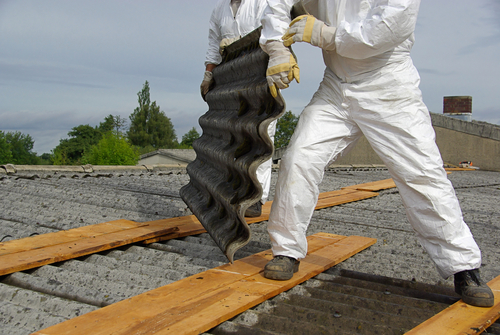
Asbestos is most dangerous when materials containing it are cut, broken, drilled, scraped, sanded, removed, demolished, repaired, or otherwise disturbed. Those activities can release fibers into the air. Workers may breathe in asbestos during demolition, renovation, cleanup, maintenance, equipment repair, pipe work, roofing, flooring, drywall work, industrial operations, or work around older buildings and machinery.
OSHA identifies asbestos hazards in construction, general industry, and maritime work. The EPA also explains that asbestos fibers may be released when asbestos-containing material is disturbed during work such as demolition, building repair, maintenance, or remodeling.
Workers and Occupations With Higher Asbestos Exposure Risk
Many asbestos claims involve exposure that occurred long before diagnosis. Some workers handled asbestos-containing products directly. Others worked nearby while other trades disturbed insulation, tiles, pipes, roofing, cement products, fireproofing, or older industrial materials.
- Construction workers, demolition workers, and renovation crews;
- insulation workers and asbestos removal workers;
- drywall workers, tile setters, roofers, carpenters, painters, and laborers;
- plumbers, pipefitters, steamfitters, welders, and iron workers;
- machinists, factory workers, and industrial maintenance employees;
- railroad workers, shipyard workers, maritime workers, and mechanics;
- auto mechanics and aircraft mechanics exposed to older brakes, clutches, gaskets, or related parts;
- firefighters, public works employees, custodians, and building maintenance workers;
- workers involved in asbestos abatement, waste removal, cleanup, or disposal.
Take-Home Asbestos Exposure and Family Risk
Asbestos exposure does not always stop at the workplace. Fibers can travel home on a worker’s clothing, shoes, hair, skin, tools, or vehicle. This is often described as household exposure, secondary exposure, or take-home exposure.
A family member may have been exposed without ever working in construction, industry, demolition, or maintenance. For example, exposure may occur when someone washes dusty work clothes, cleans a vehicle used at a job site, handles contaminated tools, or has close contact with a worker after a shift. These cases require careful attention to work history, household routines, clothing practices, vehicle use, laundry habits, and the timeline of diagnosis.
Workers’ Compensation for Mesothelioma and Asbestos Disease
Mesothelioma may support an Illinois workers’ compensation or occupational disease claim when workplace exposure contributed to the condition. These claims are different from many ordinary accident cases because exposure may have occurred gradually and the disease may not appear until decades later.
Depending on the facts, benefits may include medical treatment, disability benefits, and death benefits for eligible family members after a fatal asbestos-related disease. The Illinois Workers’ Compensation Commission Handbook provides general public information about workers’ compensation and occupational disease benefits.
Insurers may dispute these claims. Common disputes involve whether exposure happened at work, which employer is responsible, whether the medical condition is connected to asbestos, whether the proper claim was filed on time, or whether another exposure source caused the disease. A lawyer can help review employment history, exposure evidence, medical records, and possible filing strategies.
Occupational Disease Claims and Long Latency Periods
Mesothelioma cases often require a look back across decades of work. By the time a diagnosis occurs, a worker may have retired, changed trades, moved, lost old records, or worked for companies that no longer exist. Important job-site details may be difficult to remember without a structured investigation.
That does not mean the case cannot be built. Useful evidence may include former employer records, union records, Social Security work history, pension records, job-site documents, coworker testimony, military records, product records, manufacturer information, old photographs, and records showing where asbestos-containing products were used.
Our site also discusses broader occupational disease and repetitive trauma claims, including work-related conditions that develop over time instead of from one sudden accident.
Construction, Demolition, and Renovation Asbestos Exposure
Construction workers may encounter asbestos while working in older buildings, schools, factories, apartment buildings, public structures, commercial spaces, industrial sites, or homes. Exposure can occur during demolition, renovation, pipe removal, tile removal, roofing, drywall work, plaster work, insulation work, HVAC work, electrical work, plumbing work, or cleanup.
OSHA has construction-specific asbestos rules and guidance. Construction asbestos materials address topics such as asbestos surveys, repair and maintenance of asbestos cement products, exposure monitoring, medical surveillance, sample analysis, asbestos removal, and safer work practices.
When mesothelioma is linked to construction or demolition work, the investigation may need to identify property owners, general contractors, subcontractors, manufacturers, suppliers, abatement contractors, safety consultants, and other entities that may have contributed to unsafe exposure conditions.
Machine, Factory, and Industrial Asbestos Exposure
Factories, repair shops, rail yards, power plants, warehouses, boiler rooms, plants, and industrial maintenance settings may all involve asbestos exposure. Workers may encounter asbestos in older gaskets, packing, brakes, clutches, insulation, furnaces, ovens, pipes, high-heat machinery, and equipment components.
Some cases overlap with machine accident or industrial injury work because the same facilities may involve dangerous machinery, old insulation, equipment repair, maintenance projects, and toxic exposure. The investigation should examine not just the worker’s job title, but the actual materials, machinery, dust, equipment, and work areas involved.
Third-Party Lawsuits and Asbestos Trust Claims
Workers’ compensation may be only one part of an asbestos-related legal review. A mesothelioma case may also involve claims against manufacturers, suppliers, distributors, premises owners, contractors, or other businesses connected to asbestos-containing materials or unsafe job sites.
Some cases may involve asbestos bankruptcy trust claims. Those claims can require detailed exposure evidence, medical documentation, product identification, employment history, and compliance with trust procedures. The available options depend on the person’s exposure history and the companies or products connected to that exposure.
Third-party and trust claims may be important because workers’ compensation benefits may not address every loss caused by mesothelioma. Depending on the case, additional claims may involve pain and suffering, loss of normal life, disability, medical costs, lost income, family losses, and other damages allowed by law.
Fatal Mesothelioma, Death Benefits, and Wrongful Death Claims
Mesothelioma is often life-threatening. When a worker dies from mesothelioma or another asbestos-related disease connected to employment, surviving family members may need to evaluate several potential claims. These may include workers’ compensation death benefits, asbestos claims, trust claims, and a wrongful death claim.
Illinois workers’ compensation death benefits may be available for eligible surviving family members when the death is connected to employment. Our site discusses this issue more fully on the page about workers’ compensation death benefits for families.
Families should act quickly because asbestos and mesothelioma claims may involve more than one deadline. The relevant deadline may depend on the date of diagnosis, date of death, exposure location, type of claim, and the companies or trust funds involved.
Evidence That May Help Prove a Mesothelioma or Asbestos Claim
Because asbestos exposure may have occurred many years earlier, proof can be difficult to gather. Even so, several categories of evidence may help connect the disease to work, products, job sites, or unsafe exposure conditions.
- Medical records, pathology reports, imaging studies, biopsy reports, and oncology records;
- diagnostic records identifying mesothelioma, asbestosis, lung cancer, or another asbestos-related condition;
- employment history, Social Security work records, union records, payroll records, and pension records;
- job-site names, addresses, project records, contractor lists, and building records;
- product identification records, invoices, labels, manuals, safety information, and manufacturer documents;
- witness statements from coworkers, supervisors, family members, or others familiar with exposure history;
- photographs of job sites, equipment, insulation, tiles, pipes, roofing, or industrial materials;
- OSHA records, safety reports, abatement records, inspection reports, and exposure-monitoring records;
- military service records, if exposure may have occurred during service;
- expert opinions from medical, industrial hygiene, safety, vocational, or economic specialists.
Insurance Company and Defense Arguments in Asbestos Cases
Asbestos and mesothelioma cases are often contested. Employers, insurance companies, premises defendants, product companies, and other parties may challenge exposure history, causation, product identification, deadlines, diagnosis, responsibility, or case value.
Common defense arguments may include claims that exposure happened somewhere else, that the exposure was too limited, that the responsible company cannot be identified, that the illness came from another cause, that old records are unavailable, that a deadline was missed, or that the claimant cannot prove contact with a specific asbestos-containing product.
These defenses make early investigation important. Work history, witness statements, job-site evidence, product information, and medical records can be easier to gather before additional time passes.
Why Choose Sexner Injury Lawyers LLC?
Since 1990, Sexner Injury Lawyers LLC has represented injured workers and families in Chicago and throughout Illinois. Our team understands that asbestos and mesothelioma matters are not ordinary injury claims. They require careful review of medical records, employment history, exposure sources, deadlines, and all possible sources of recovery.
Our firm has handled serious workers’ compensation, occupational disease, and third-party injury matters. You can learn more about our past work by reviewing our verdicts and settlements.
Contact Our Chicago Mesothelioma and Asbestos Exposure Lawyers
After a diagnosis tied to asbestos exposure, legal advice can help workers and families understand what options may still be available. Sexner Injury Lawyers LLC can review work history, exposure sources, medical documentation, potential defendants, workers’ compensation issues, and possible family claims.
Contact us for a free case evaluation at (312) 243-9922 or contact us online.
Additional Mesothelioma, Asbestos, and Workers’ Compensation Sources
For general background, you may review the American Cancer Society’s information about mesothelioma, mesothelioma causes and risk factors, and mesothelioma symptoms. You may also review OSHA’s asbestos safety information, OSHA’s asbestos construction resources, EPA’s asbestos overview, and the Illinois Workers’ Compensation Commission Handbook. These sources provide general information and do not replace legal advice about a specific asbestos or mesothelioma claim.