
Chicago School Bus Accident Lawyers
 A school bus accident can leave parents with urgent questions about safety, medical care, insurance, school responsibility, and legal deadlines. Some children are hurt while riding the bus. Others are injured while boarding, exiting, crossing in front of the bus, waiting near a stop, walking through a pickup or drop-off area, or traveling near a school zone where drivers should expect children to be present.
Sexner Injury Lawyers LLC represents injured children and families in Chicago, Arlington Heights, and throughout Illinois. If your child was hurt in a school bus crash, struck near a stopped bus, or injured because a school transportation provider failed to use proper safety procedures, call (312) 243-9922 to discuss what happened. We can review the facts, identify who may be responsible, and explain the steps needed to protect your child’s claim.
School Bus Accident Claims Are Different From Ordinary Traffic Cases
A school bus injury case is rarely limited to one careless driver. The bus may be owned by a public school district, operated by a private transportation contractor, maintained by another company, or involved in a crash caused by a third-party motorist. The stop location may have been selected by a school, district, transportation company, or public agency. Each possibility can affect the investigation, insurance coverage, defenses, and filing deadlines.
Children also require a different injury analysis. A child may not describe symptoms clearly, may minimize pain, or may show emotional trauma only after the physical injuries receive attention. A serious school bus case should consider immediate treatment, future care, school performance, growth, mobility, development, emotional recovery, and the effect on family life.
Because multiple companies, schools, districts, drivers, insurers, and public entities may be involved, families should not assume that the first explanation is complete. A careful investigation can determine whether the crash was caused by a negligent driver, unsafe bus stop, poor supervision, inadequate training, defective equipment, dangerous roadway condition, or a combination of failures.
How School Bus Accidents Happen
School bus accidents can happen in many ways. Some involve a direct collision between the bus and another vehicle. Others involve a child outside the bus, where blind spots, traffic, and unsafe procedures can create serious danger. A child may be hurt even when the school bus itself is not heavily damaged.
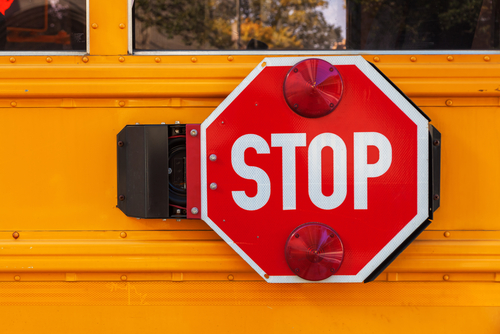
- A driver passes a stopped school bus with its stop arm extended
- A bus driver fails to check mirrors, blind spots, or the danger zone around the bus
- A child is struck while crossing in front of or behind the bus
- A bus is hit by a negligent driver, including a distracted or speeding motorist
- A crash involves a large vehicle, including a truck accident
- The bus company fails to train, screen, or supervise the driver
- The bus has poor maintenance, worn brakes, tire problems, defective lights, or broken safety equipment
- The route, stop, or crossing location exposes children to unnecessary risk
- A school, district, or contractor fails to use safe loading and unloading procedures
- A child with a disability is not properly assisted, secured, or supervised during transport
Some cases also connect to broader car accident claims, pedestrian accident claims, or bus and public transportation accident claims, depending on whether the child was inside the bus, walking near it, crossing the street, or riding in another vehicle.
The Danger Zone Around a School Bus
Many serious injuries occur in the area around a school bus rather than inside it. Safety organizations often refer to the space immediately around a stopped school bus as the “danger zone” because children may be difficult for the driver to see near the front, sides, or rear of the bus. Children may also drop an item, turn back unexpectedly, cross before the driver signals, or assume traffic will stop.
Drivers, aides, school staff, and transportation companies must use procedures that account for how children behave. A child should not pay the price for an unsafe stop, a hurried route, a driver who failed to look, or a motorist who ignored flashing lights and a stop arm.
Danger-zone cases may involve missing supervision, poor driver training, blind spots, unsafe handrails or doors, inadequate crossing procedures, failure to count children before moving the bus, or failure to use an assistant for younger students or children with disabilities. When a child is struck near a bus, the investigation should examine whether every required safety step was actually followed.
Illinois School Bus Stop-Arm Cases
Illinois law places strict duties on drivers approaching a stopped school bus that is loading or unloading children and displaying required visual signals. These cases can become especially serious when a driver ignores flashing red lights, passes too close, or continues before children are clear of the roadway.
Evidence in a stop-arm case may include police reports, witness statements, school bus camera footage, dashcam video, nearby business cameras, photos of the road, route documents, bus driver statements, and records showing when the bus stopped and when its warning equipment was activated.
Stop-arm violations are not merely traffic problems. They can become catastrophic child injury cases. A driver who tries to pass a stopped bus may strike a child at the very moment the child is most vulnerable. Families should preserve any information about the vehicle, driver, license plate, witnesses, bus number, route, school, and exact stop location as quickly as possible.
Public School, Private Contractor, and Government Entity Issues
School transportation may involve a public school district, private school, charter school, public entity, private bus contractor, special education transportation provider, maintenance company, or outside driver. The identity of each party matters because the legal rules, insurance coverage, and deadlines may change depending on who controlled the bus, route, driver, stop location, or safety procedures.
When a public entity is involved, different rules may apply. Claims against local public entities and their employees can have shorter deadlines than ordinary personal injury cases. Families should not wait to find out who operated the bus or which deadline controls.
A private contractor may also be responsible for negligent hiring, poor driver training, failure to review complaints, unsafe route planning, lack of supervision, or poor vehicle maintenance. If a school hired an outside transportation company, both the contractor and the school or district may need to be reviewed.
Injuries Children May Suffer in School Bus Accidents
School bus accidents can cause injuries that disrupt a child’s education, activities, sleep, confidence, and daily routine. Even when the bus itself looks largely intact, a child may have struck a seatback, floor, window, handrail, door, curb, pavement, or another student.
- Traumatic brain injuries, concussions, headaches, dizziness, or memory problems
- Neck, back, shoulder, knee, wrist, or ankle injuries
- Broken bones, growth-plate injuries, or orthopedic complications
- Cuts, facial injuries, dental injuries, scarring, or disfigurement
- Internal injuries, abdominal trauma, or chest injuries
- Fear of riding the bus, nightmares, anxiety, or emotional distress
- Catastrophic injuries requiring long-term care or major life changes
Families should take complaints seriously, even when a child says only that something “feels weird” or that they do not want to ride the bus again. Medical care can protect the child’s health and create documentation needed for a claim.
Who May Be Responsible for a School Bus Injury?
Responsibility depends on how the accident happened and who controlled the transportation. A full investigation should look beyond the first explanation offered by the bus company, school, or insurance adjuster.
- The school bus driver
- A private school transportation company
- A public school district or other public entity
- A negligent third-party driver
- A maintenance company or repair provider
- A manufacturer of defective bus parts or safety equipment
- A company responsible for route planning, driver staffing, or safety training
- A government body responsible for dangerous road, signal, or crossing conditions
- A school, daycare, camp, or other organization responsible for supervising the child
In some cases, more than one party may share responsibility. For example, one driver may have ignored a stop arm while a bus company used an unsafe stop location, failed to document prior complaints, or failed to follow safe loading procedures. A thorough legal review should identify every available source of recovery.
Evidence That Should Be Preserved Quickly
Important evidence can disappear soon after a school bus accident. Video may be overwritten, vehicles may be repaired, routes may change, and witnesses may forget details. A fast investigation can help preserve proof before it is lost.
- Bus number, route number, school name, district name, and driver name
- Photos of the bus, roadway, stop, intersection, and visible injuries
- Names and contact information for students, parents, teachers, aides, and bystanders
- Police report numbers and ambulance or hospital records
- Bus maintenance records and inspection history
- Driver hiring, training, discipline, and qualification records
- Stop-arm, dashcam, surveillance, and traffic-camera footage
- Route planning documents and prior complaints about the same stop or driver
- School communications, parent emails, transportation notices, and incident reports
Parents should also keep medical bills, school absence records, photos, prescriptions, therapy notes, insurance letters, and a written timeline of what the child reported after the incident.
Insurance Defenses in School Bus Accident Claims
Insurance companies and transportation providers may try to reduce responsibility by blaming a child, a parent, another driver, road conditions, weather, or the school district. They may argue that the child moved unexpectedly, crossed in the wrong place, failed to listen, or had a preexisting condition. These defenses should be challenged with evidence.
Children do not behave like adults. Drivers and school transportation providers must account for the fact that young children can be impulsive, small, difficult to see, and dependent on adults for safe procedures. A strong case may use video, route documents, training materials, witness testimony, accident reconstruction, medical records, and school policies to show what should have happened.
Reported School Bus Verdicts and Settlements Show the Stakes
School bus and bus-stop injury cases around the country show how serious these claims can become. Publicly reported cases have involved multi-million-dollar recoveries after children were struck while boarding, injured in school-bus crashes, dragged during unloading, or harmed because transportation procedures failed.
These examples do not predict the value of any Illinois case. Every claim depends on liability, injuries, insurance, damages, evidence, and the law that applies. But they do show why school transportation failures require careful investigation and serious legal attention.
Compensation for an Injured Child and Family
A school bus injury claim may seek compensation for medical treatment, future care, therapy, pain, emotional distress, disability, scarring, loss of normal childhood activities, out-of-pocket costs, and losses experienced by parents while caring for the child.
When an accident causes permanent harm, the claim must consider future needs. A child may need follow-up care, counseling, surgery, mobility support, school accommodations, or long-term treatment. If a school bus accident causes a fatal injury, the family may need to consider a wrongful death claim.
How Sexner Injury Lawyers LLC Can Help
Sexner Injury Lawyers LLC can investigate the accident, identify responsible parties, obtain records, preserve video, communicate with insurers, review medical documentation, and evaluate the full effect of the injury on the child and family. We understand that school bus cases often involve children, schools, contractors, government entities, and aggressive insurance defenses.
Our firm also handles broader child injury cases throughout Illinois. We know that a parent’s priority is protecting the child, getting answers, and making sure the responsible parties do not avoid accountability.
Since 1990, Sexner Injury Lawyers LLC has represented injured clients and families in serious personal injury, child injury, transportation, and wrongful death cases. Our team knows how to pursue evidence, challenge insurance defenses, and build the type of case needed when a child’s future has been affected by preventable harm.
Frequently Asked Questions About School Bus Accident Claims
Should I call a lawyer if my child seems only mildly hurt?
Yes, it may still be wise to get legal guidance if your child was hurt on or near a school bus. Some injuries, including concussions, orthopedic injuries, anxiety, and soft-tissue injuries, may worsen or become more obvious after the accident.
What if another driver caused the crash instead of the school bus driver?
The other driver may be responsible, but the school bus driver, transportation company, school, route planner, or another party may still need to be reviewed. A complete investigation should identify every cause of the accident.
What if my child was injured while getting on or off the bus?
Loading and unloading cases can involve stop-arm violations, blind spots, unsafe stops, poor supervision, driver error, or failure to follow required procedures. These cases should be investigated quickly because video and witness evidence may disappear.
How fast should I act after a school bus accident?
You should act as soon as possible. When public entities or school districts are involved, special rules and shorter deadlines may apply. Even when the deadline is not the immediate issue, important video and records can be lost if no one moves quickly to preserve them.
Talk to a Chicago School Bus Accident Lawyer
If your child was injured on a school bus, near a school bus, or because a driver failed to stop for a school bus, contact Sexner Injury Lawyers LLC. Call (312) 243-9922 to discuss the accident, the possible evidence, and the deadlines that may apply.
You can also contact us online. We represent families in Chicago, Arlington Heights, and throughout Illinois.